How far in advance should I start planning cash flow for peak season?
Start planning 6-8 months before your peak season begins. Align your planning timeline with your longest supplier lead time plus a 1-month buffer for unexpected delays. If your inventory takes 4 months to produce and ship, begin forecasting, budgeting, and securing financing 5-6 months out minimum. Wayflyer can fund in 24-48 hours, but securing your facility early means you're not rushing when suppliers are demanding deposits.
What is a good cash reserve for a seasonal eCommerce business?
Maintain 3-6 months of fixed operating expenses as a cash reserve. Calculate your fixed monthly burn rate (payroll, rent, subscriptions, insurance) and multiply by 3 for a minimum buffer, 6 for a conservative cushion. This reserve protects you if sales disappoint or unexpected costs arise.
How does the cash conversion cycle change during peak season?
During peak season, your cash conversion cycle typically lengthens. Inventory days increase as you stock up for demand. Payable days often compress as suppliers demand faster payment for larger orders. The net effect: more cash tied up for longer, creating greater cash requirements.
What financing options work best for seasonal inventory purchases?
Revenue-based financing aligns best with seasonal inventory needs. Wayflyer offers funding decisions in 24-48 hours with repayments that flex with your revenue curve, so you pay more when sales are strong and less when sales slow. This eliminates the cash flow mismatch created by fixed-payment financing during your off-season when cash is tight.
How do payment processor holds affect cash flow during peak sales?
Payment processor holds create larger cash gaps at higher volumes. Stripe holds funds for around 2 days. Amazon holds marketplace payouts for up to 14 days. At peak volumes, these delays mean significant cash remains unavailable while you cover supplier payments, ad spend, and fulfillment costs. Build processor-specific hold periods into your cash flow forecast by channel.
How does seasonality affect ecommerce cash flow?
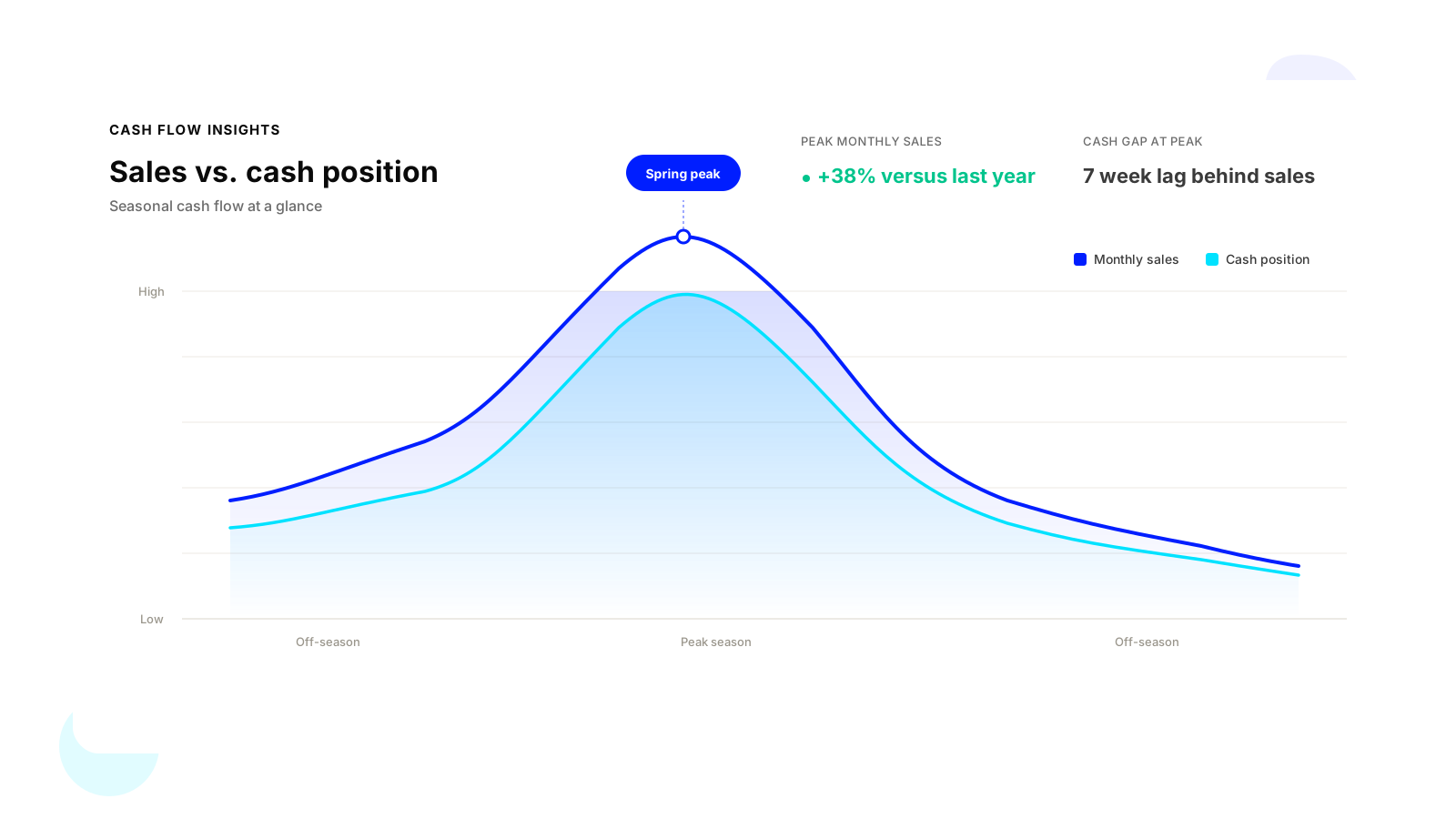
Seasonality creates two distinct cash flow pressures. In peak season, you commit cash months before sales hit, buying inventory, scaling marketing, and absorbing higher fulfillment costs. In off-season, fixed costs continue while revenue drops, eroding your cash reserves. Plan around both phases simultaneously: use peak season to build reserves, and use off-season to restructure costs and renegotiate supplier terms.
How do seasonal businesses manage cash flow differently from non-seasonal businesses?
Seasonal eCommerce businesses build cash flow plans around peak-and-trough cycles instead of steady-state operations. They run 13-week rolling forecasts with worst-case scenarios, hold larger cash reserves (3-6 months versus 1-3 for non-seasonal), use revenue-based financing instead of fixed-payment loans, and align supplier payment terms with their sales calendar. Non-seasonal businesses can use simpler monthly forecasts and smaller reserves.
What's the difference between a 12-month and a 13-week cash flow forecast?
A 12-month cash flow forecast gives strategic visibility for the year, useful for annual planning, financing decisions, and major investments. A 13-week rolling forecast gives tactical visibility for the next quarter, updated weekly so you can react to changes in real time. Seasonal eCommerce businesses should run both: the 12-month for strategic decisions, the 13-week for operational ones.
How much working capital do I need for peak season?
Calculate your peak working capital requirement as the sum of: peak inventory cost + peak marketing spend + 1.5x normal monthly fixed costs (to cover the lag between cash outlay and revenue arrival). For a business expecting $1 million in peak sales with 50% COGS and 20% marketing spend, that's $500,000 inventory + $200,000 marketing + 1.5x your normal monthly burn, typically $750,000–$900,000 of working capital tied up at peak.